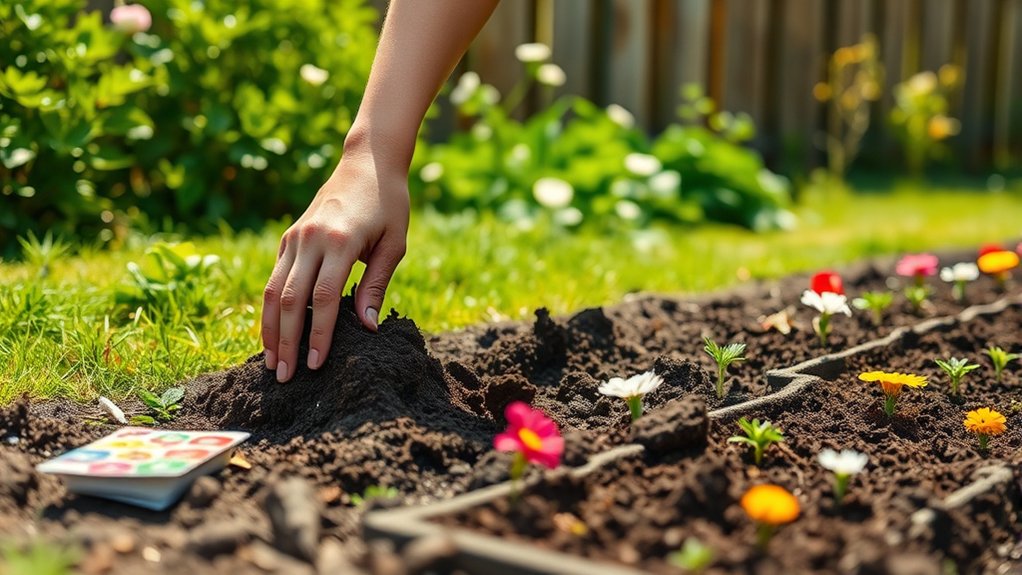
Create a New Flower Bed in 3 Simple Steps
Starting a flower bed can feel overwhelming when you’re unsure where to begin or how to help your plants thrive. You’re not alone—many gardeners struggle to get the setup right. These simple steps make creating a new flower bed easier.
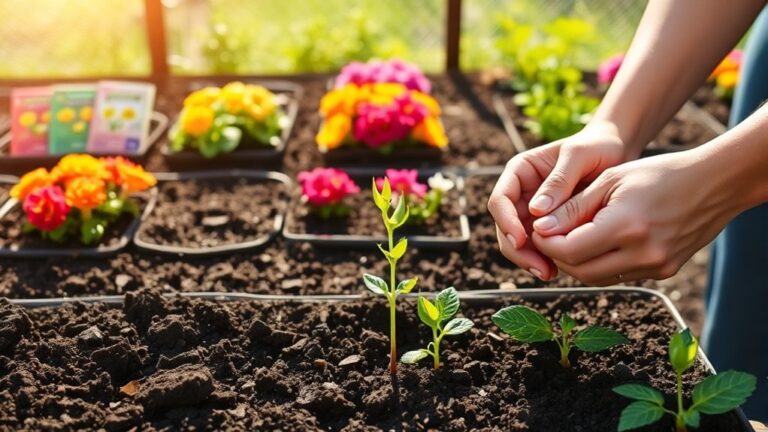
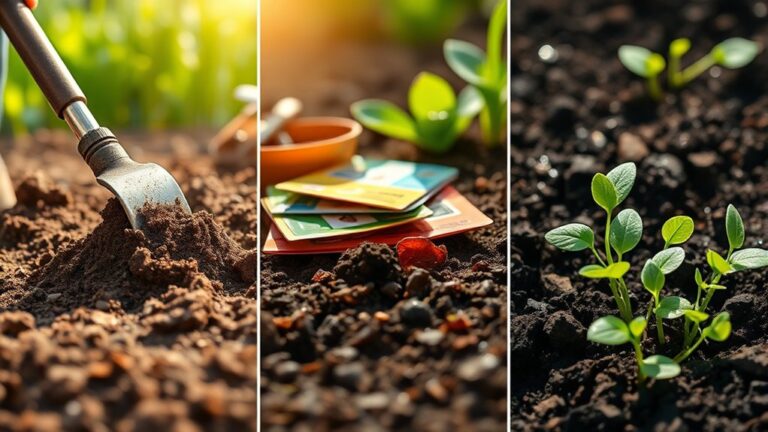
Create a new flower bed in three simple steps. First, choose a level, well-drained spot with sunlight that suits your flowers, and mark a practical shape you can reach without stepping inside. Next, remove grass and weeds, then loosen the soil 8–12 inches; use soil-test results to guide any amendments. Finally, plant climate-appropriate flowers at their recommended spacing, water thoroughly, and add two to three inches of mulch, keeping it away from stems. A few more tips can help your bed thrive.
Key Takeaways
- Choose a sunny, well-drained location that suits your flowers and is easy to view and reach.
- Mark a practical bed shape, keeping it clear of paths, utilities, and high-traffic areas.
- Remove grass and weeds, then loosen the soil 8–12 inches when it is dry enough to work.
- Test the soil and add compost or other amendments according to the results and local guidance.
- Plant flowers suited to the site, water thoroughly, and add 2–3 inches of mulch away from stems.
Choose a Flower Bed Location and Layout
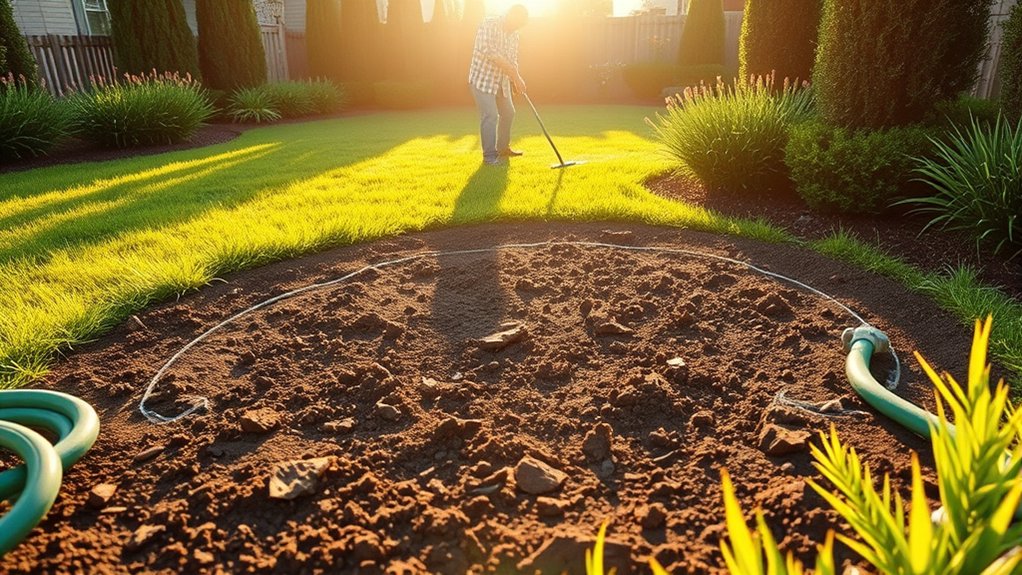
Start by choosing a spot that gets the amount of sunlight your flowers need and has well-drained soil. Check the plant labels before you decide, since some flowers thrive in full sun while others prefer partial shade. Watch the area throughout the day to understand its location sun exposure, and note nearby trees or buildings that may cast shade.
Consider soil drainage, too. After rain, look for puddles or soggy patches that linger; many flowers struggle when their roots stay wet. Choose a level area or a gentle slope, and avoid places where water collects.
Next, picture how the bed will look from your windows, porch, or path. A curved edge can soften a lawn, while a straight border may suit a formal garden. Match the bed’s size to the space and your available time for care. Leave enough room to reach every plant without stepping into the bed, and keep the layout clear of walkways, utility lines, and areas you use often.
Clear Weeds and Prepare the Soil
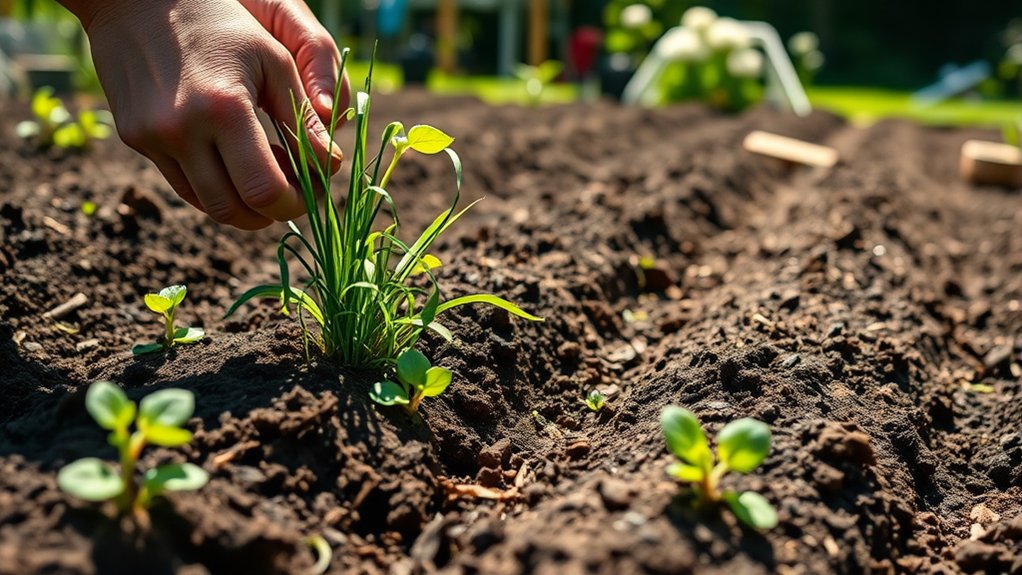
Once you’ve marked the bed’s shape, remove grass and weeds so they won’t compete with your flowers. Use a spade to lift sod, then pull weeds by the roots. For stubborn growth, choose weeding techniques that suit the plant: dig out deep roots rather than snapping them off. Avoid working wet soil, which compacts easily.
| Task | Tool | Purpose |
|---|---|---|
| Lift sod | Spade | Remove grass |
| Pull weeds | Hand fork | Extract roots |
| Loosen soil | Garden fork | Improve texture |
| Check nutrients | Soil test | Guide amendments |
Next, loosen the soil to a depth of about 8–12 inches, breaking up clumps without pulverizing it. Remove stones and leftover roots as you work. Arrange soil testing before adding compost or other amendments; follow the results and local guidance rather than guessing.
If the ground drains poorly, assess the cause before changing its structure. Finish by raking the surface level, leaving the bed clean and ready for the next stage.
Choose Flowers, Plant Them, and Add Mulch
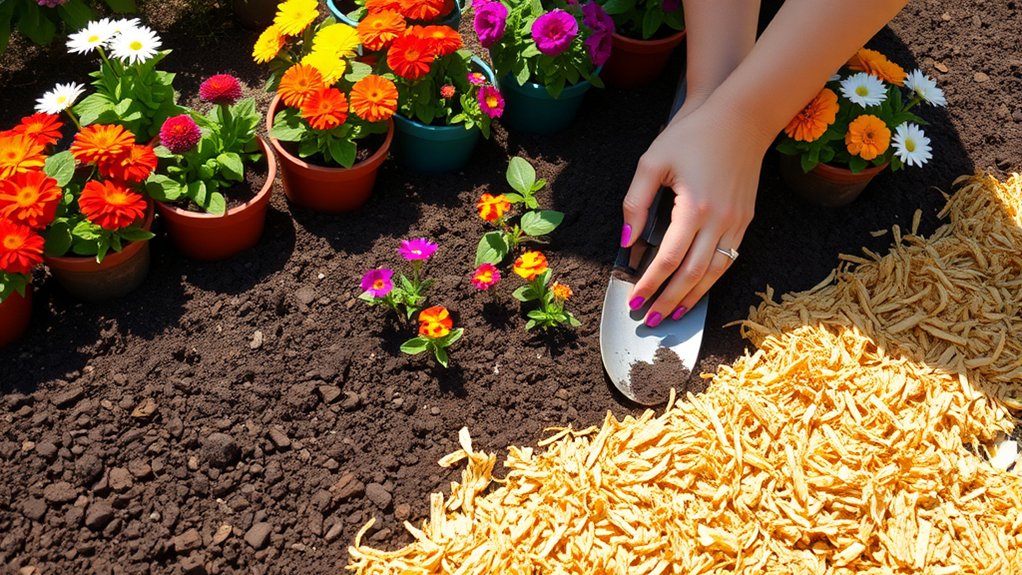
Choose flowers suited to your climate, sunlight, soil, and the bed’s size, checking plant labels for spacing and care needs. Plan flower color palettes that complement your home and bloom across several seasons.
Include pollinator friendly choices, such as native flowers that provide nectar and pollen. Mix heights and textures, placing taller plants toward the back or center of the bed and shorter varieties near the edges.
Before planting, arrange pots on the soil to test the layout. Leave enough room for mature plants, and group flowers with similar water needs.
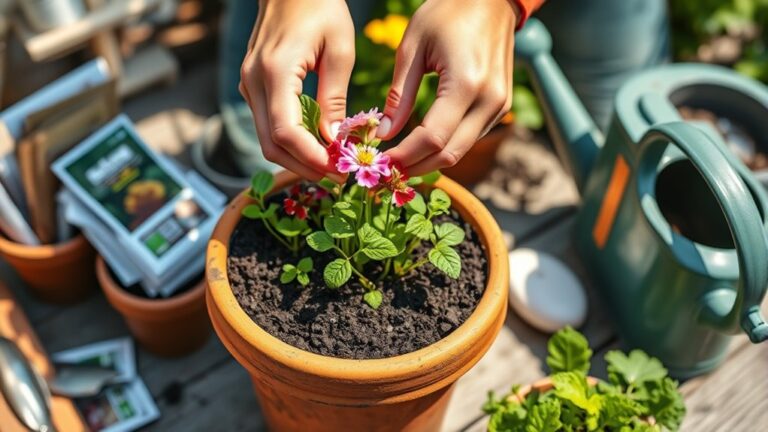
Dig each hole as deep as the root ball and about twice as wide. Gently loosen tangled roots, set each plant at its original soil level, then refill and firm the soil. Water thoroughly to settle roots and reduce transplant stress.
Spread a two- to three-inch layer of mulch over the bed, keeping it away from stems and crowns. Mulch helps retain moisture, suppress weeds, and moderate soil temperature.
Check the bed regularly and water when the topsoil feels dry.
Frequently Asked Questions
What Tools Do I Need to Create a Flower Bed?
You’ll need a spade or shovel to remove grass and turn soil, plus a garden fork to loosen compacted ground. Use a rake to level the bed, and a tape measure and stakes with string to mark your garden layout.
For soil preparation, bring compost in a wheelbarrow and mix it in with a hand trowel. Add gardening gloves, pruning shears, and a hose or watering can to finish planting and water thoroughly.
How Much Does It Cost to Build a Flower Bed?
You can build a flower bed for about $100–$500; for example, a 4-by-8-foot bed might cost $200 with edging, soil, mulch, and plants. Your cost breakdown depends on bed size, materials, plant choices, and whether you hire help.
DIY usually costs less, while professional installation can exceed $1,000. Budget for ongoing care, too: a simple maintenance schedule for watering, weeding, and replacing plants helps protect your investment and keep the bed thriving.
When Is the Best Time of Year to Create a Flower Bed?
The best time to create a flower bed is usually spring or early fall, when temperatures are mild and rain helps plants establish roots. Choose seasonal planting windows that suit your region and the flowers you want to grow.
Plan soil preparation timing a few weeks before planting, so you can amend and settle the soil. For best mulch timing, apply mulch after planting. Check local forecasts to find climate friendly planting windows and avoid extreme heat or frost.
How Can I Protect a Flower Bed From Pets?
Protect your flower bed with low fencing, sturdy edging, and pet-safe barriers; a 2022 survey found that 70% of U.S. households own a pet, so plan for curious visitors. Try these pet proofing ideas: cover bare soil with mulch, add paths to guide paws, and use motion-activated sprinklers. For cats, provide a separate digging area. Plant daffodils as daffodil deterrents around vulnerable spots, but keep them away from pets because they’re toxic if eaten.
Do I Need Permission to Create a Flower Bed in My Yard?
You usually don’t need permission to create a flower bed in your own yard, but local rules and property restrictions can affect your plans. Check your homeowners’ association guidelines, lease, and utility easements as part of your permission considerations.
Ask your city about zoning questions, especially if you’re changing drainage or working near a sidewalk. Confirm planting permissions for shared spaces, and consider giving neighbors notice if the bed borders their property or may affect access.
Conclusion
With the right spot chosen, weeds cleared, and soil ready, your flower bed is set to bloom. Plant flowers suited to your light and climate, then tuck them in with a layer of mulch.
Soon, you’ll see bright petals rising from rich earth, turning an empty patch into a colorful garden. Take a moment to enjoy the scene, along with the fresh scents and cheerful shades you’ve created.
Your simple three-step project can grow into a welcoming corner you’ll love all season long. Creating a new flower bed is a simple way to bring color and life to your garden.